

Christian Ciardi si appassiona alla fotografia già da
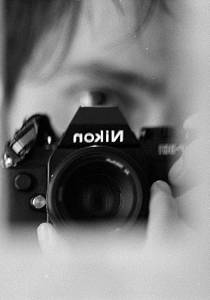
ragazzo. All’inizio utilizza la Nikormat, camera mitica
negli anni ’70, seguita poi dalla Nikon FM 2. Inizia
così a frequentare concerti Jazz. In seguito
comincia a usare la Nikon F90, tutte macchine a
pellicola e privilegia il bianco/nero ed infine la Nikon
D700. Frequentando il Festival Jazz di Mulhouse, in
Francia, conosce un fotografo di grande esperienza
e docente presso la Scuola delle Arti di Mulhouse
che gli propone una filosofia dello “scatto”
fotografico per lui nuovo e consiste nell’aggiungere
alla foto anche la dinamica come movimento, il
gesto che il musicista compie durante la
performance, in modo da creare un’ immagine più
suggestiva ed evidenzia anche l’energia espressa
con il suono. Per lui lo scatto deve essere studiato
attentamente ed agire solo quando si verifica il
momento atteso, senza avere fretta, la foto la si
deve avere già nella testa e per questo privilegia la
funzione “manuale” rispetto all’automatica, l’unico
modo per poter controllare l’evento desiderato. |
Besondere Einblicke in die Faszination Jazz
gewährt der von Kindheit an eng mit der
Musik verbundene Bozner Fotograf Christian
Ciardi in der Fortsetzung seiner bisherigen
Ausstellungen "Jazzlights". Er hat es sich
zum Ziel gesetzt, in schwarz-weiß
Fotografien die Momente auf Konzerten
festzuhalten, die für ihn das Wesen der
Künstler und der Musik auszeichnen, und
damit mehr als die statische Dokumentation
eines Augenblicks sein sollen. Dabei finden
unterschiedliche Stilmittel wie fotografische
Sequenzen und lange Belichtungszeiten ihre
Anwendung, während auf eine
Nachbearbeitung bewusst verzichtet wird,
um einerseits die Technik in den
Hintergrund zu rücken und andererseits der
Dynamik der Musik den notwendigen Raum
zu geben. |
„Right now I consider the role of photography in my life as mentioned: plain and simple. As a pure
autodidact I can allow myself the luxury of uncomplicated views and approaches“. Most importantly,
photography is infinite fun to me and I don't think that I could think of any more appropiate concluding
words than these.Christian Ciardi has consistently been engaging in photography since his childhood.
Born in Bolzano he soon discovers his love for black and white depiction and is influenced by such
renowned photographers as Henri C. Bresson, Josef Koudelka, Guy Le Querrec and Pascal Bichain.
Meeting Bichain during a Jazz Festival in Mulhouse (F, 2002) has a substantial impact on his perception of
man and time. Time may not be defined as a static object by photography, but photography must
embrace the temporal sequences and represent them as such. Christian Ciardi tries to implement this
view not only in jazz photography. He remains an autodidact and lives and works in Innsbruck, Austria. |